
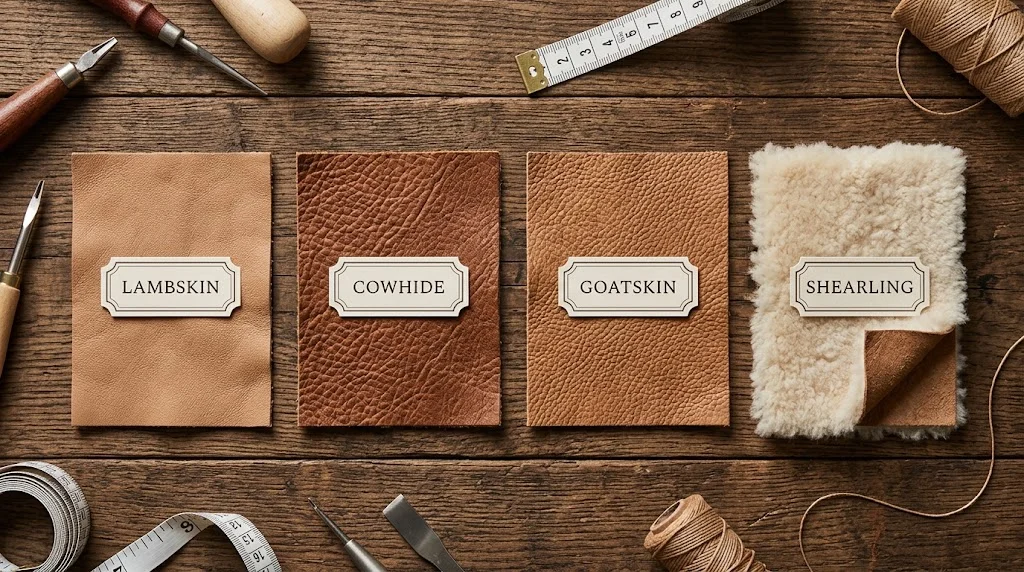
Lambskin vs Cowhide Leather: Which Is Best for Your Jacket
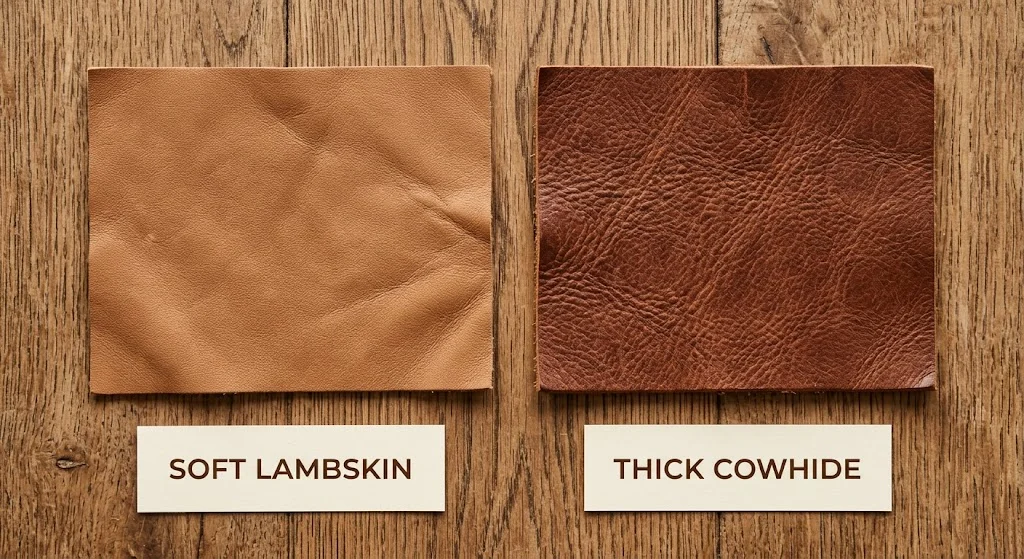
Lambskin or cowhide? Compare softness, durability, price, and best use cases to choose the right leather for your next jacket.
Not all leather is created equal, and the type used in your jacket affects nearly everything about how it looks, feels, and holds up over years of wear. The two most common choices you’ll come across when shopping for a genuine leather jacket are lambskin and cowhide, and each has genuinely distinct strengths depending on what you’re looking for. Understanding the real differences between them — not just in softness, but in durability, weight, break-in behavior, and appropriate use cases — will save you from buying a jacket that looks great in photos but doesn’t suit how or where you actually plan to wear it. This guide goes deep into both materials so you can make a genuinely informed choice.
What Is Lambskin Leather, Exactly?
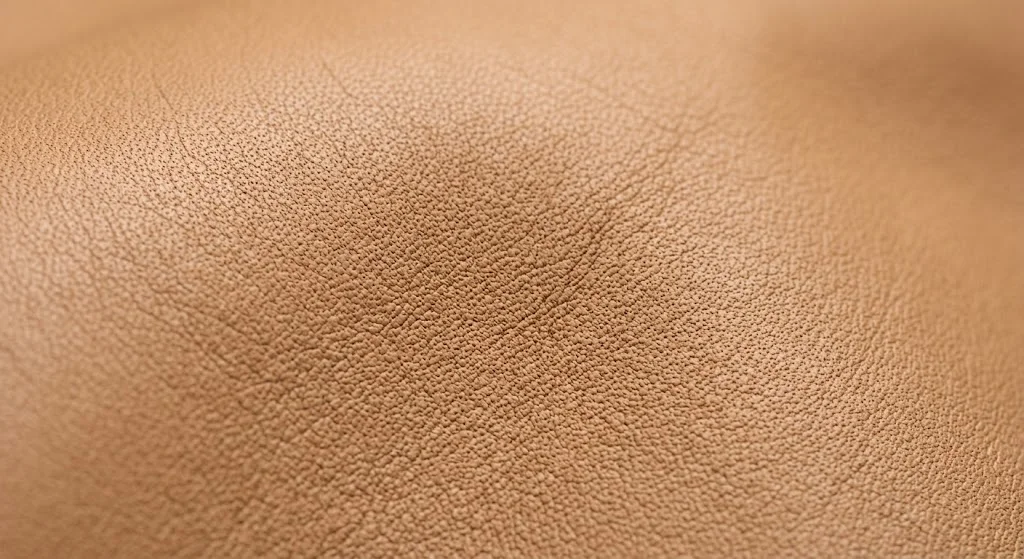
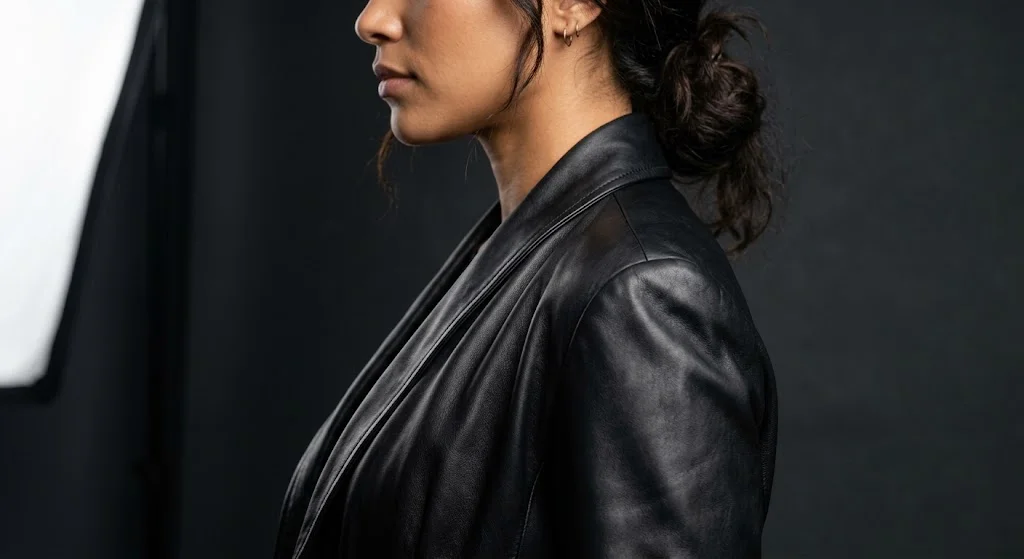
Lambskin comes from young sheep and is known throughout the leather industry for having one of the finest, softest grains of any commonly used leather type. It’s prized for its buttery-soft texture and lightweight feel right out of the box, meaning it doesn’t need the long break-in period that thicker, stiffer leathers often require before they become comfortable. Lambskin drapes naturally against the body rather than holding a rigid shape, which is part of why it’s a favorite choice for fashion-forward jacket designs and leather tracksuits, where movement and comfort matter as much as appearance.
How Lambskin Is Processed
Lambskin typically goes through a tanning process specifically optimized to preserve its natural softness and fine grain, often using techniques that keep the hide supple rather than maximizing thickness or rigidity. This processing approach is part of why lambskin feels so different from cowhide even before considering the natural differences between the two source materials — the tanning process itself is tailored to bring out lambskin’s inherent softness.
The Trade-Offs of Lambskin
That same softness comes with a trade-off: lambskin is naturally thinner than cowhide, which means it’s somewhat more delicate and more prone to scuffing or scratching from rough surfaces, sharp edges, or abrasive contact. It’s also generally less wind-resistant in extreme cold compared to a heavier hide, simply because there’s less material density to block wind and retain warmth. This doesn’t mean lambskin is a poor choice — it means it’s the right choice for certain conditions and the wrong choice for others, which is the core theme of this entire comparison.
What Is Cowhide Leather, Exactly?
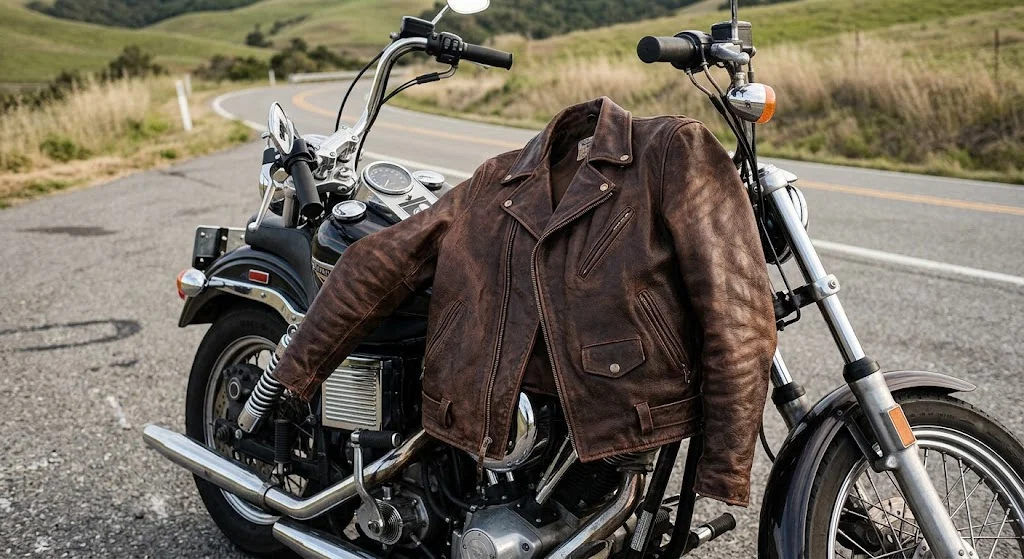
Cowhide comes from cattle and is significantly thicker and more fibrous than lambskin. It’s tougher, more resistant to scuffs and abrasion, and stands up far better to wind, general daily wear, and rough handling over time. Cowhide takes noticeably longer to break in when new, often feeling somewhat stiff for the first several wears, but it gradually molds to your body shape the more you wear it, developing a rugged, lived-in character that many people specifically look for in a leather jacket. This is why cowhide has remained the standard material choice for motorcycle jackets and heavy-duty workwear-style outerwear for decades — its density provides genuine functional protection, not just an aesthetic preference.
How Cowhide Is Processed
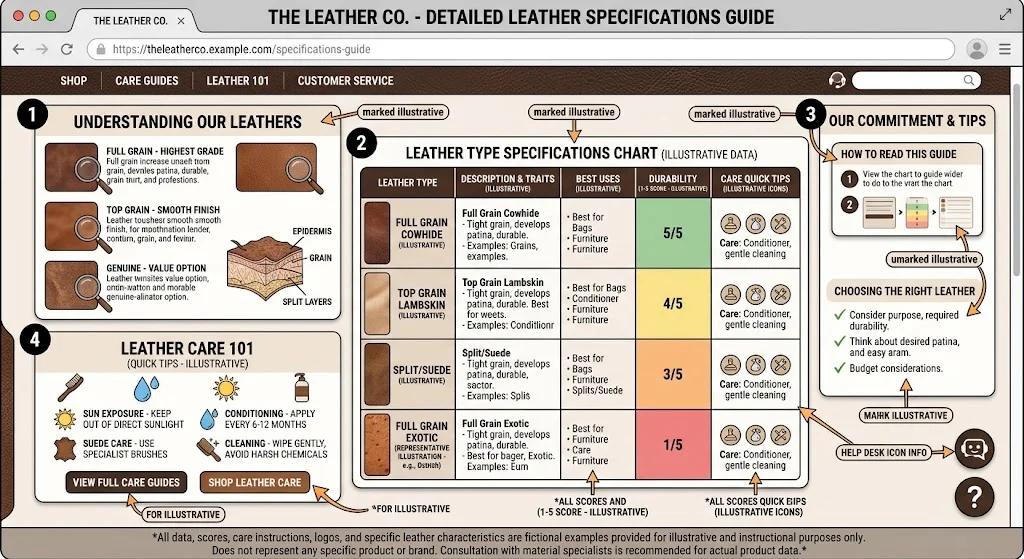
Cowhide processing varies depending on intended use, but jacket-grade cowhide is typically full-grain or top-grain leather, referring to how much of the original hide’s outer layer is retained during processing. Full-grain cowhide keeps the entire natural grain intact, showing the hide’s natural markings and variations, and is generally considered the highest quality and most durable option. Top-grain cowhide has the outermost layer lightly sanded and refined for a more uniform, polished appearance, trading a small amount of the natural character for a more consistent, refined look.
The Trade-Offs of Cowhide
The added durability comes with added weight — cowhide jackets are noticeably heavier than lambskin equivalents, which some people find less comfortable for all-day wear, particularly in warmer climates where a heavier jacket can feel genuinely uncomfortable rather than just slightly less convenient. The longer break-in period also means a brand-new cowhide jacket won’t feel as immediately comfortable as lambskin does straight out of the box — some people find the initial stiffness off-putting before the leather has had time to soften and mold to their body through regular wear.
Side-by-Side Comparison
| Feature | Lambskin | Cowhide |
|---|---|---|
| Softness | Very soft, supple immediately | Firm initially, softens with wear |
| Durability | Moderate | Excellent |
| Weight | Lightweight | Heavier |
| Break-in period | Minimal | Longer (weeks to months) |
| Wind resistance | Moderate | Excellent |
| Best Season | Spring/Autumn | Winter |
| Best Use Case | Fashion jackets, tracksuits | Motorcycle jackets, workwear-style outerwear |
| Typical Price Point | Moderate | Moderate to higher (thicker material) |
Which Should You Choose Based on Climate?
If you live somewhere with mild winters and mostly need a jacket for spring, autumn, and cool evenings, lambskin’s lightweight comfort makes it an excellent everyday choice that won’t feel overly warm or heavy during moderate temperatures. If you’re in a climate with genuinely cold, windy winters — much of the UK and northern parts of the US included — cowhide’s density and wind resistance make it the more practical option for months of regular outdoor wear, as covered in more detail in our dedicated UK winter styling guide.
Which Should You Choose Based on Use Case?
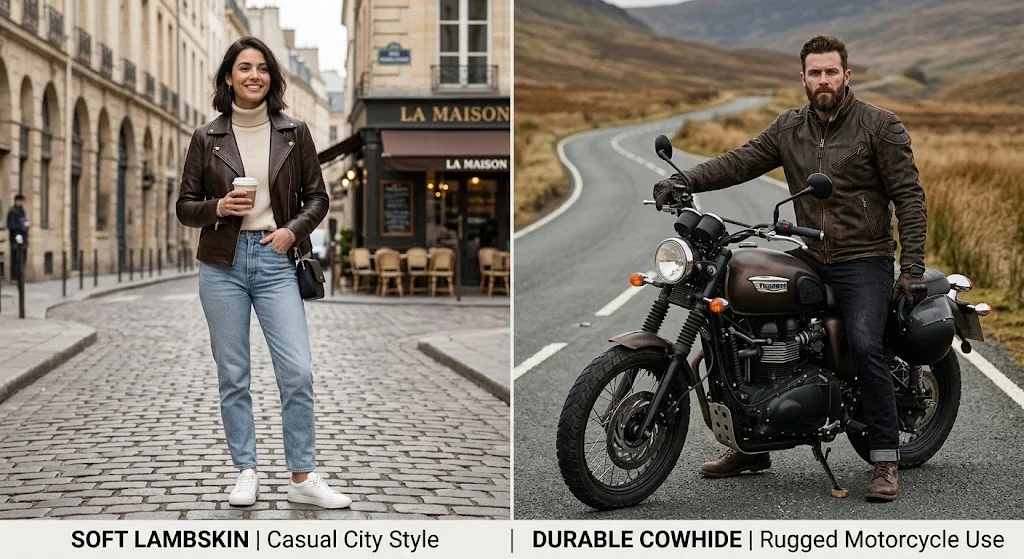
Think honestly about how the jacket will actually be used day to day. A jacket meant primarily for riding a motorcycle needs the abrasion resistance and structure that cowhide provides — this isn’t just a style preference but a genuine safety consideration, since cowhide’s density offers real protective value in the event of contact with road surfaces. A jacket meant for everyday city wear, layering over outfits, and general fashion use benefits more from lambskin’s comfort and lighter feel, since it won’t be subjected to the same rough conditions a motorcycle jacket faces on a regular basis.
How to Tell the Difference When Shopping Online
If you’re unable to feel the material in person, check the product description carefully for the specific leather type listed — genuine sellers will state clearly whether a jacket is lambskin or cowhide, since it’s a meaningful difference in both feel and price that responsible sellers disclose upfront. Be cautious of listings that only say “genuine leather” without specifying the type, as this can sometimes indicate a lower-quality or blended hide being used without full disclosure, or simply an incomplete listing that doesn’t give you the information needed to make an informed choice.
Questions to Ask a Seller Before Buying
- Is this lambskin or cowhide leather specifically?
- Is it full-grain or top-grain leather?
- What weight or thickness is the leather (if known)?
- What type of lining is used, and does it add insulation?
- How should this specific leather type be cared for and conditioned?
A knowledgeable, transparent seller should be able to answer these questions clearly and specifically, rather than giving vague responses — this is itself a useful signal of product quality and seller trustworthiness.
Caring for Each Leather Type
Lambskin requires gentler handling and more frequent conditioning, since its thinner structure dries out and shows wear more quickly than cowhide. Use a lighter touch when cleaning, and consider conditioning slightly more often than the standard three-to-six-month guideline if you wear the jacket frequently. Cowhide is more forgiving of infrequent conditioning and rougher daily handling, though it still benefits from the same basic maintenance routine of periodic cleaning and conditioning to prevent long-term drying and cracking, as detailed in our complete leather jacket care guide.
Price Considerations: Is One Genuinely More Expensive?
Pricing between lambskin and cowhide jackets varies more by brand, construction quality, and design complexity than by the raw material cost difference alone, so it’s difficult to say definitively that one is always more expensive than the other. That said, cowhide’s greater material usage (due to thickness) and generally longer-lasting durability sometimes justifies a higher price point for equivalent quality construction, while lambskin’s lighter material usage can sometimes offset this. The more useful question isn’t which leather type costs more in the abstract, but which leather type delivers better value for your specific intended use — a lambskin jacket worn frequently in mild weather may provide excellent value despite a comparable price to a cowhide jacket that would be overkill for the same conditions.
Other Leather Types Worth Knowing About
While lambskin and cowhide are the two most common choices, it’s worth briefly knowing about a few related materials you may encounter while shopping.
Goatskin
Goatskin sits somewhere between lambskin and cowhide in terms of thickness and durability, offering a reasonable middle ground of softness and toughness, though it’s less commonly used in mainstream jacket manufacturing than the two primary options covered in this guide.
Shearling
Shearling refers to sheepskin that retains the wool on one side, typically used as a lining or full-coat material rather than a standard jacket shell, prized specifically for its exceptional warmth in cold climates, as covered in our seasonal styles overview.
Suede
Suede is leather (often from lambskin or goatskin) that’s been finished with the inner, napped side facing outward rather than the smooth outer grain, giving a distinctive soft, textured appearance, though it requires different, more careful care than smooth-finished leather due to its more delicate surface.
Making Your Final Decision: A Simple Framework
If you had to choose based on a single priority, use this simple framework: choose lambskin if comfort, lightweight feel, and drape are your top priorities, particularly for fashion-forward pieces or milder climates. Choose cowhide if durability, wind resistance, and long-term ruggedness are your top priorities, particularly for motorcycle use or genuinely cold climates. If you’re still unsure after considering both, a custom-made jacket allows you to request either material specifically, along with the exact color, lining, and detailing you want, removing the need to compromise on a ready-made option that might not perfectly match your specific priorities.
Which leather lasts longer, lambskin or cowhide?
Cowhide generally lasts longer and holds up better to daily wear and rough conditions, while lambskin is softer and more comfortable but comparatively more delicate over time.
Is lambskin real leather?
Yes, lambskin is genuine leather made from sheep hide — it’s simply thinner and softer than cowhide, not a synthetic or lower-quality alternative.
Is cowhide too heavy for everyday wear?
Not necessarily — while heavier than lambskin, many people wear cowhide jackets daily without issue, particularly in colder climates where the added warmth and durability are genuinely useful.
Which leather is better value for money?
It depends on how the jacket will be used. Cowhide often provides better long-term value due to its durability, while lambskin offers better value for occasional or seasonal wear where comfort matters more than longevity.
What’s the difference between full-grain and top-grain cowhide?
Full-grain retains the entire natural hide surface with its original markings, generally considered the highest quality. Top-grain is lightly sanded for a more uniform look, trading some natural character for consistency.
Can lambskin be used for a motorcycle jacket?
While technically possible, lambskin’s thinner structure offers less abrasion resistance than cowhide, making cowhide the more common and practical choice for genuine motorcycle use.
Explore jackets in both materials — Bomber Jackets or Motorcycle Jackets — or request your preferred leather in a custom order.



Leave a Reply