
Leather Jacket Size Guide: US vs UK Sizing Explained
Confused between US and UK jacket sizes? This guide breaks down the size conversion, measuring techniques, and fit issues so you order the perfect fit.
One of the most common questions we hear from international shoppers is deceptively simple: “Is a UK Medium the same as a US Medium?” The short answer is that they’re usually close, but not identical — and getting this wrong on a leather jacket is far more frustrating than making the same mistake with a t-shirt or a pair of socks, since leather doesn’t stretch or adjust the way stretch fabric does. Once a leather jacket is made, the fit is essentially fixed for the life of the garment. Getting sizing right the first time saves you the hassle of returns, exchanges, and the disappointment of a jacket that never quite feels right. This guide covers exactly how to get it right, whether you’re ordering from the USA, the UK, or anywhere in between.
Why US and UK Sizing Aren’t Perfectly Identical
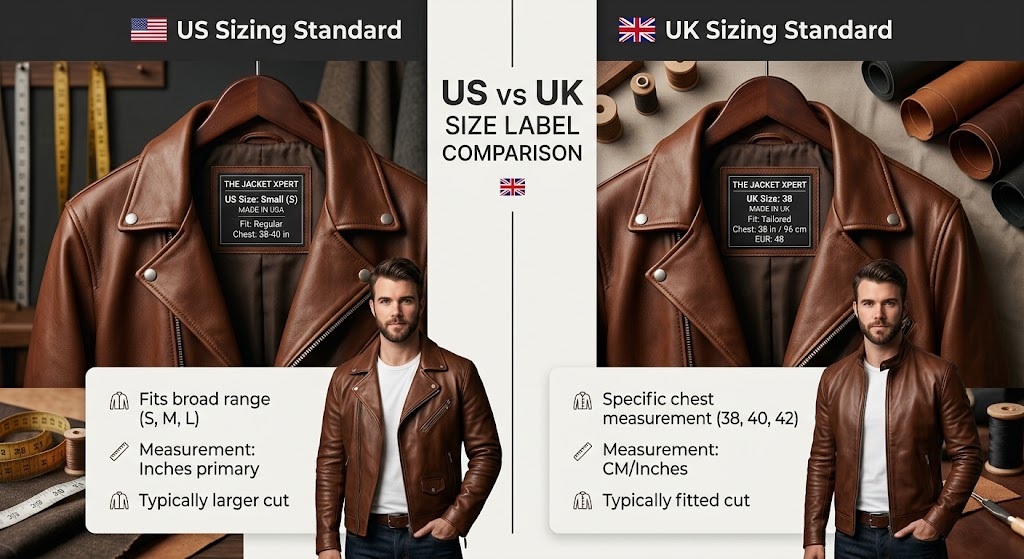
Clothing sizing standards were developed somewhat independently across different regions over decades, and while US and UK sizing for men’s outerwear are broadly similar, small variations crept in over time, particularly around chest measurements at each labeled size. This means a jacket labeled “Medium” from a UK-based brand and a jacket labeled “Medium” from a US-based brand won’t always correspond to the exact same chest measurement. The gap is usually small — often just an inch or two in chest circumference — but on a fitted leather jacket, an inch or two is often the difference between a comfortable fit and one that feels noticeably off, either too tight across the chest when zipped or with excess fabric bunching at the sides.
A Brief History of Why Sizing Diverged
Clothing sizing systems emerged from different national standards bodies and retail conventions that developed somewhat independently through the 20th century. The US and UK, despite sharing a language and significant cultural overlap in fashion, never fully standardized their sizing conventions against one another the way some other measurement systems were unified. The result is a system where sizes are close enough to cause confusion, but different enough to genuinely matter when buying something as fit-sensitive as a structured leather jacket.
US vs UK Jacket Size Conversion Table
| US Size | UK Size | Chest (inches) | Chest (cm) |
|---|---|---|---|
| Small | Small (34-36) | 36-38 | 91-97 |
| Medium | Medium (38-40) | 40-42 | 102-107 |
| Large | Large (42-44) | 44-46 | 112-117 |
| XL | XL (46-48) | 48-50 | 122-127 |
| 2XL | 2XL (50-52) | 52-54 | 132-137 |
*Replace with your brand’s exact measurements before publishing — this table should match your real product spec sheet.
How to Measure Yourself Correctly, Step by Step
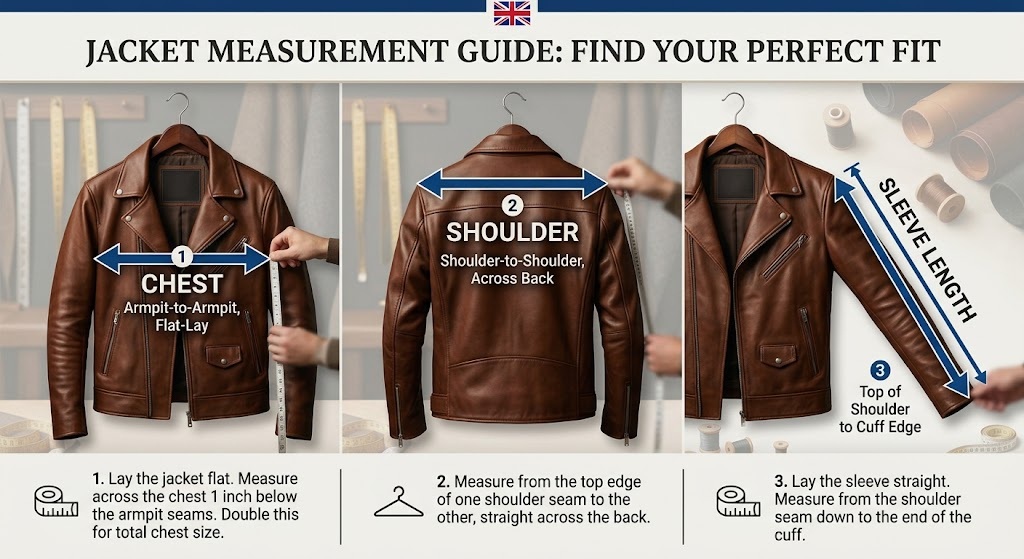
- Chest: Wrap the tape measure around the fullest part of your chest, keeping it level and snug but not tight. Take a normal breath while measuring rather than expanding your chest artificially, since this will give an inflated, inaccurate number.
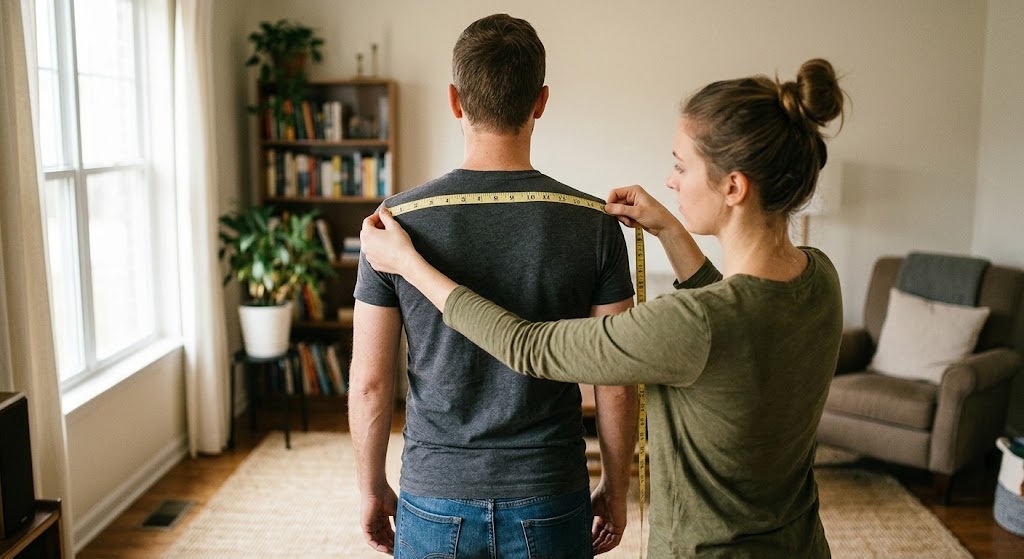
- Shoulders: Measure from one shoulder seam to the other across your back, following the natural line of your shoulders rather than pulling the tape flat across, which underestimates the actual shoulder width.
- Sleeve length: Measure from the shoulder seam to your wrist bone with your arm slightly bent, not held perfectly straight, since this is closer to how your arm naturally sits when wearing and moving in a jacket.
- Torso length: Measure from the base of your neck down to where you’d like the jacket to end, which varies depending on whether you prefer a cropped or longer fit.
- Waist: For a fitted jacket style, measure around your natural waistline, keeping the tape level all the way around.
Tools You’ll Need for Accurate Self-Measurement
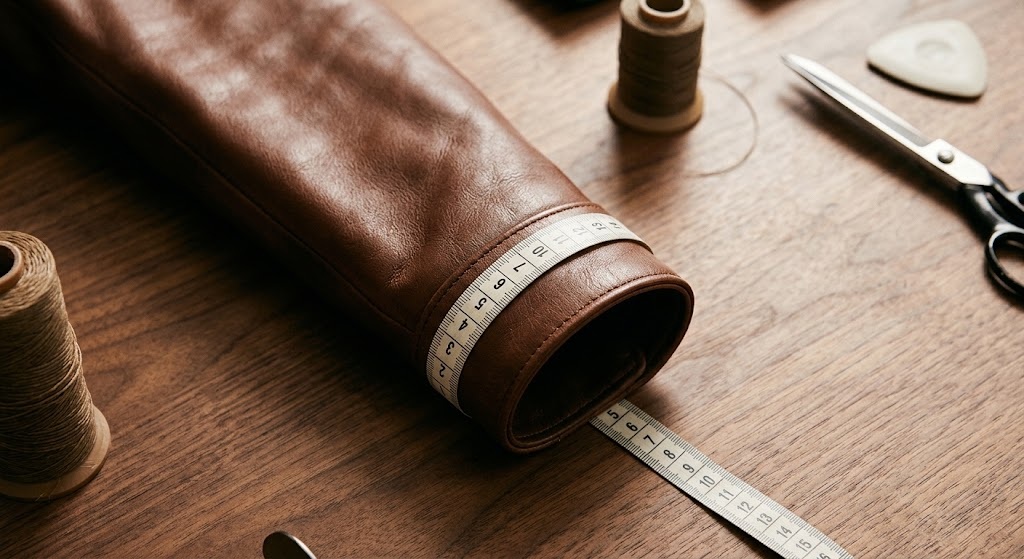
A soft cloth tape measure is essential — a rigid metal tape measure, like the kind used for construction, doesn’t wrap naturally around the body and will give inaccurate readings. Ideally, wear a well-fitted t-shirt while measuring rather than a bulky sweater, since thick layers underneath will inflate your measurements beyond your actual body size. Standing straight but relaxed, rather than pulling your shoulders back artificially, also produces more accurate and usable results.
Common Sizing Mistakes to Avoid
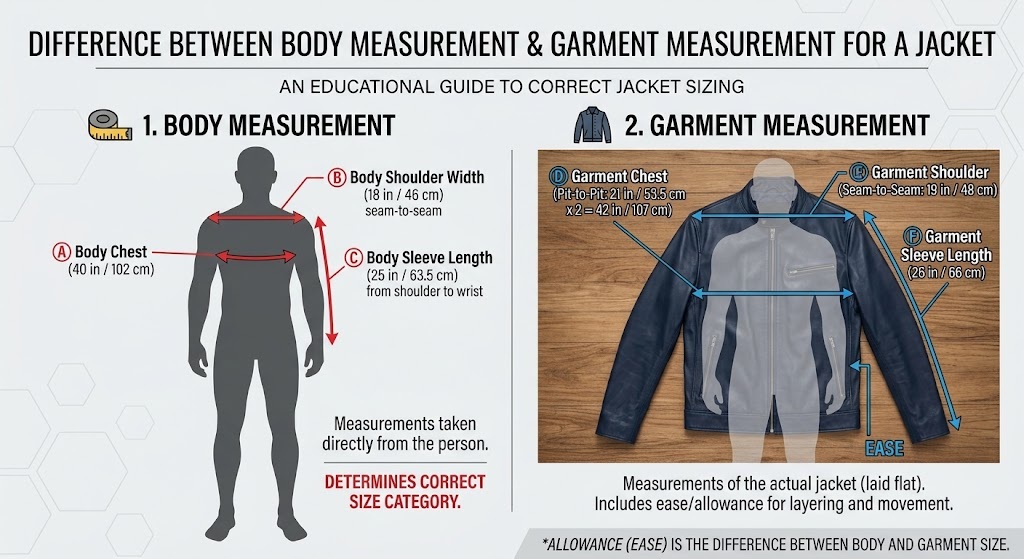
The single biggest mistake shoppers make is measuring an existing item of clothing rather than their actual body, then comparing that flat measurement to a size chart built around body measurements — these are two different things and mixing them up leads to sizing errors even when someone is being careful and methodical about it. Another common issue is measuring alone without help, which often results in a tape measure that isn’t held level across the back for the shoulder measurement, since it’s genuinely difficult to see and adjust your own back measurement accurately without assistance. Where possible, have someone else take your shoulder and chest measurements for the most accurate result, particularly for the shoulder measurement, which is the hardest to self-measure reliably.
Mistake: Relying on Memory of Your Size From Years Ago
Body measurements change over time, sometimes more than people expect, whether through natural aging, fitness changes, or simple lifestyle shifts. Relying on a size you remember wearing several years ago, rather than measuring fresh, is a common source of sizing disappointment. Always measure current, not remembered, measurements when ordering something as fit-critical as a leather jacket.
Mistake: Ignoring the Difference Between Body Measurements and Garment Measurements
Some size charts list body measurements (the size of the person the jacket is designed for) while others list garment measurements (the actual finished dimensions of the jacket itself, which include ease — extra room built in for comfortable movement and layering). Always check which type of measurement a specific chart is using, since confusing the two leads directly to ordering the wrong size, particularly ordering too small if you mistake garment measurements for body measurements without accounting for the built-in ease.
What to Do If You’re Exactly Between Two Sizes
This happens more often than you’d expect, and there’s no single correct answer — it depends on how you prefer a jacket to fit and how you plan to wear it. Sizing up generally gives more room for layering underneath, which matters if you’re planning to wear the jacket through colder months over a jumper or thermal base layer. Sizing down gives a more fitted, tailored silhouette but leaves less room for heavier layers, which can matter significantly in colder climates like much of the UK through winter. If you genuinely can’t decide, this is one of the clearest signals that a custom-made jacket, built to your precise measurements rather than a size bracket, is the better choice, since it removes the need to compromise between two imperfect standard options.
Sizing Differences Between Jacket Styles
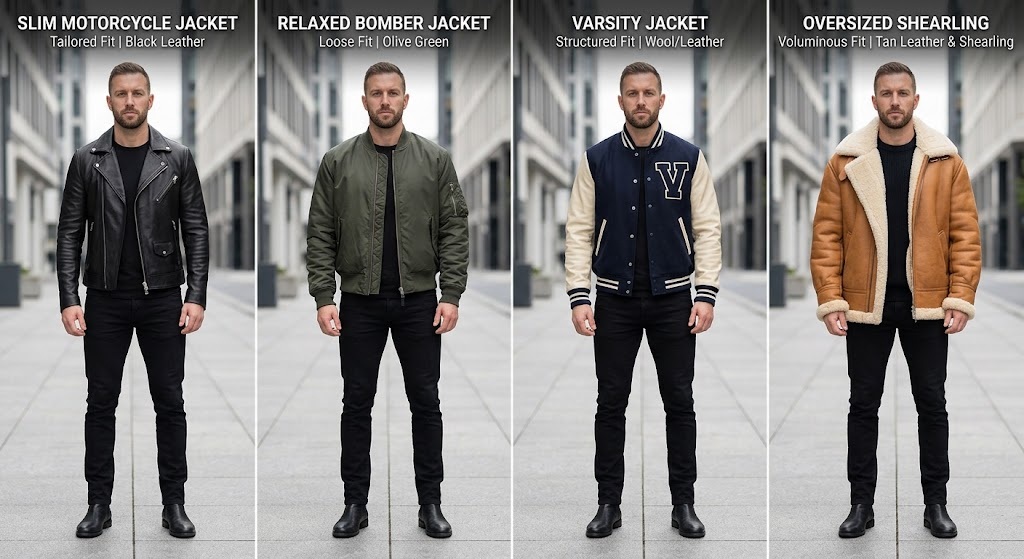
It’s worth noting that sizing conventions can also vary by jacket style, not just by region. A slim-fit motorcycle jacket is generally designed to sit closer to the body than a relaxed bomber jacket of the same labeled size, meaning the same “Medium” label can fit quite differently depending on the specific cut. Always check whether a size chart is style-specific or a general brand-wide chart, and factor in the intended fit — slim, regular, or relaxed — described in the product listing alongside the raw measurements.
| Jacket Style | Typical Fit Intent | Sizing Note |
|---|---|---|
| Motorcycle jacket | Slim/fitted | Consider sizing up slightly if layering underneath |
| Bomber jacket | Regular to relaxed | True to size for most body types |
| Varsity jacket | Regular | True to size, check sleeve length specifically |
| Shearling jacket | Relaxed/oversized | Often sized generously to accommodate bulk |
International Shoppers: A Few Extra Considerations
If you’re ordering from outside the country where a brand is based, it’s always worth double-checking whether their size chart is presented in US or UK standard, or in direct chest measurements — the safest approach in every case is to compare your own chest, shoulder, and sleeve measurements directly against the brand’s stated measurements in inches or centimeters, rather than relying on the size label alone. Many international shoppers make the mistake of assuming their “home” size label translates directly, when checking the actual listed measurements takes only a couple of extra minutes and removes almost all sizing risk.
European Sizing: A Quick Note
For shoppers also considering European-labeled sizing, note that European sizes typically run on yet another numbering system entirely (often 46, 48, 50, and so on), which doesn’t map directly onto either US or UK letter-based sizing without conversion. If a size chart includes European sizing, always cross-reference against the chest measurement in inches or centimeters rather than trying to mentally convert between three different systems at once.
Why Custom Sizing Solves This Problem Entirely
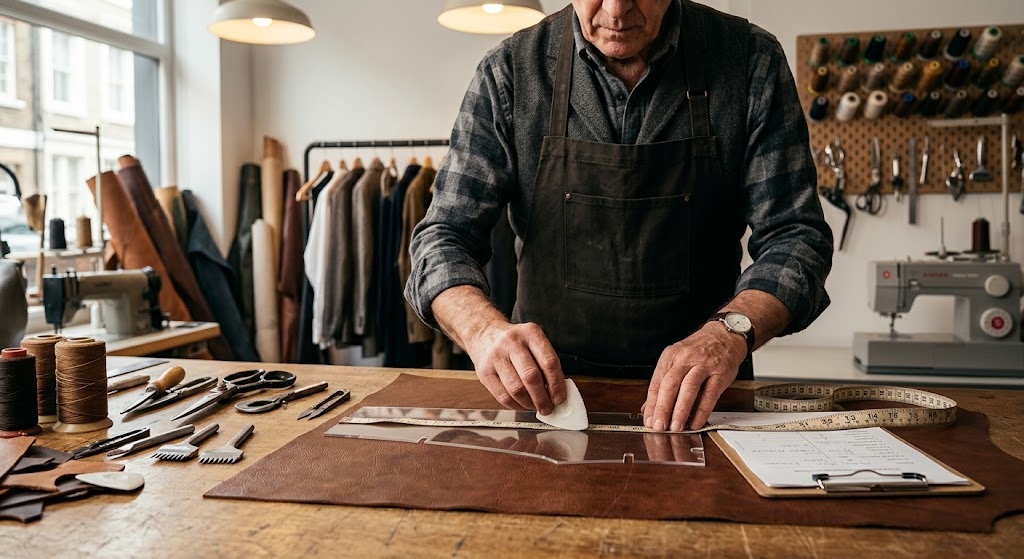
Standard size charts, no matter how carefully built, are always an approximation designed to fit as many body types as reasonably possible within a limited number of size brackets. If your build doesn’t closely match the “average” a particular chart was designed around — broader shoulders relative to your chest, a longer or shorter torso than typical, longer arms — a custom-made jacket removes the guesswork completely. You provide your exact measurements using the guide above, and the jacket is cut specifically for your body rather than for a size label that’s trying to fit a wide range of different people at once within the same bracket.
What to Do If Your Jacket Arrives and Doesn’t Fit
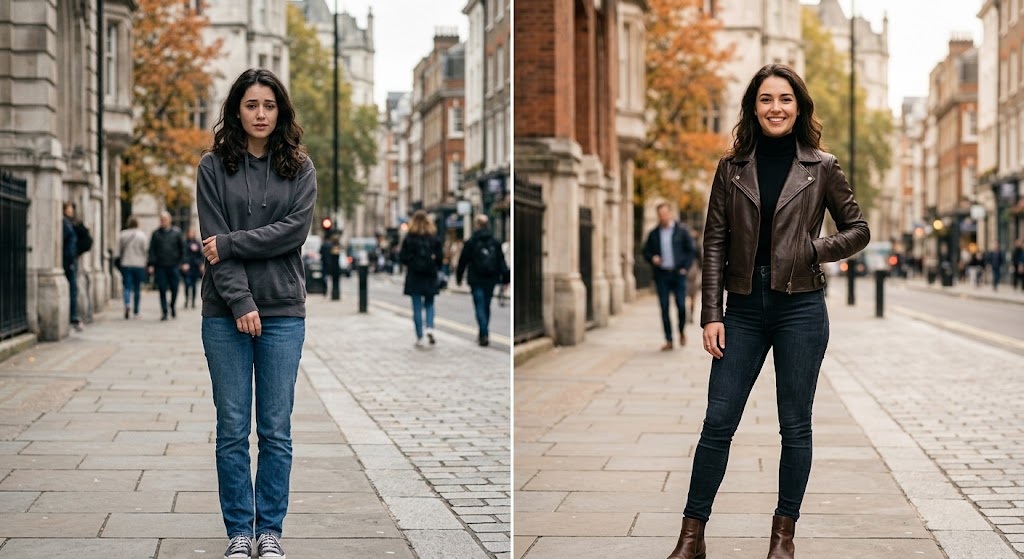
Even with careful measuring, sizing issues occasionally happen — leather can vary slightly between production batches, and human measurement always has a small margin of error. If a jacket arrives and doesn’t fit as expected, first identify exactly where the fit issue is (too tight across the chest, sleeves too long, shoulders sitting wrong) rather than simply concluding “wrong size” generally, since this specific information helps determine whether an exchange, a tailor adjustment, or a different size entirely is the right next step. Check the seller’s return and exchange policy before ordering, as covered in our complete online buying guide, so you know your options in advance rather than discovering them after the fact.
A Quick Reference Checklist Before You Order
- ✅ Measured your actual body, not an existing garment
- ✅ Used a soft cloth tape measure, not a rigid one
- ✅ Had help measuring shoulder width if possible
- ✅ Compared measurements in inches/cm directly against the seller’s chart, not just the size label
- ✅ Checked whether the chart uses body or garment measurements
- ✅ Considered the specific jacket style’s fit intent (slim, regular, relaxed)
Is UK sizing the same as US sizing for jackets?
They’re close but not identical. UK sizing labels can correspond to a slightly different chest measurement than the same labeled US size — always check chest inches directly rather than relying on the size name alone.
What if I’m between two sizes?
Size up for a more relaxed fit with room for layering, size down for a more tailored silhouette, or order a custom-made jacket built to your exact measurements to avoid the issue entirely.
Should I measure myself or an existing jacket?
Always measure your actual body rather than an existing garment, since flat garment measurements and body measurements are calculated differently and comparing them directly can lead to sizing errors.
Do different jacket styles use different sizing?
Yes — a slim-fit motorcycle jacket and a relaxed bomber jacket in the same labeled size can fit quite differently, so always check the specific style’s fit intent alongside the raw measurements.
What’s the safest way to size correctly when ordering internationally?
Compare your own body measurements in inches or centimeters directly against the seller’s stated chest, shoulder, and sleeve measurements, rather than relying on matching size labels across different countries.
Not sure which size fits you? Check our full size guide or order a custom-fit jacket instead.

Leave a Reply